Monday, April 18, 2016

About Biodiesel

Biodiesel is the healthy, earth-friendly alternative to diesel gasoline. Made from natural products, it is more efficient as well as less harmful to the environment. In fact, it's remains can actually benefit the ecosystem where it is left!


http://biodiesel.org/
http://www.afdc.energy.gov/fuels/biodiesel.html

Wednesday, April 6, 2016

Biodiesel Lab

In class, we made our own biodiesel! Below is a picture in the process:
We ended up using our biodiesel to propel our boats in the boat races. It paid off because my team took 2nd!


Monday, April 4, 2016

Hybridization

Hybridization is the idea that atomic orbitals fuse to form newly hybridized orbitals, which in turn, influences molecular geometry and bonding properties. At first, it was a slightly challenging concept to grasp. But with practice, it became easy and I began to realize the patterns that never change.


https://www.khanacademy.org/science/chemistry/chemical-bonds/copy-of-covalent-bonds/v/sp3-hybrid-orbital-jay-final
https://chemistry.boisestate.edu/richardbanks/inorganic/bonding%20and%20hybridization/bonding_hybridization.htm

Resonance Structures

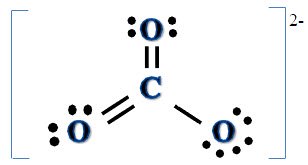
Resonance structures show the different ways in which bonding structures can be shown. In reality, all of the possible resonance structures are put together in the actual molecule. As shown in the picture below, this bonded molecule can be shown in these possible ways, even though it is essentially the same thing.

https://www.khanacademy.org/science/organic-chemistry/organic-structures/formal-charge-resonance/v/resonance-intro-jay
http://preparatorychemistry.com/Bishop_Resonance.htm


Electron Dot Formulas

Electron dot diagrams are visual ways of seeing how electrons are shared and distributed within bonds. They show the numbers of bonded pairs as well as lone pairs.

https://www.youtube.com/watch?v=y6QZRBIO0-o
https://www.khanacademy.org/science/chemistry/chemical-bonds/copy-of-dot-structures/v/drawing-dot-structures


Sunday, March 6, 2016

Unit Exam

I am fairly confident that I did well on this exam. This unit came easier to me than others, and I put a lot of work into understanding the concepts. The biggest challenge was remembering all of the little details that are the difference between getting a question right and not getting it right, such as the conversions or exceptions. I took my time and made sure that I understood the questions, and I think that this paid off because Frank warned us that the biggest grade killer was reading the question wrong. Hopefully I did as well as I'm anticipating; my grade really needs it!!!!

Image result for happy face

Wavelength, Frequency, and Energy Calculations

This was the only math portion of this unit. Within it, there are 3 equations that helped us calculate wavelength, energy, and frequency. It took some time to get the hang of it because we had to remember things such as Planck's constant and multiplying by Avogadro's number when calculation moles/photon, but once it was practiced a lot, it became second nature. I studied this a lot for the quiz and got all of the problems right, and by the time the exam rolled around, I barely had to touch up on it to remember. This is probably one of my favorite math concept that we have done in this class!

http://www.chemteam.info/Electrons/calc-energy-freq-wavelength.html
http://www.kentchemistry.com/links/AtomicStructure/waveequations.htm