Sunday, May 8, 2016

Ideal Gas Law

Ideal Law is where all of the three come together. It is modeled on the Kinetic Theory of Gases as well.


http://hyperphysics.phy-astr.gsu.edu/hbase/kinetic/idegas.html

Avagadro's Law

Avagadro's Law holds that temperature and pressure are constant, and the volume is directly proportional to the number of moles of gas present. Also, equal volumes of gases at the same temperature and pressure have the same number of particles.


http://www.chemteam.info/GasLaw/Gas-Avogadro.html

Charles' Law

This law tells us that volume and temperature share a direct relationship at a constant temperature, the temperature being at Kelvin. To convert from Celsius to Kelvin, you simply add 273.15.


https://www.khanacademy.org/test-prep/mcat/physical-processes/gas-phase/v/charles-law
http://www.chemteam.info/GasLaw/Gas-Charles.html

Boyle's Law

Boyle's Law holds that temperature and moles are constant. There are also conversions for pressure that you need to remember, such as pascals (101,325), torr (760), and a few more. Once you are able to make a data table of the numbers present, you simply plug into the formula below.


https://www.grc.nasa.gov/www/k-12/airplane/boyle.html
https://www.khanacademy.org/test-prep/mcat/physical-processes/gas-phase/v/boyles-law


Intermolecular Forces

The below pictures show how to easily navigate intermolecular forces. By following the flowchart, you will be able to know what force is present. Fun fact: everything has SOME London Dispersion forces!!


http://chemistry.bd.psu.edu/jircitano/IMforces.html
https://www.khanacademy.org/science/organic-chemistry/gen-chem-review/electronegativity-polarity/v/intermolecular-forces-and-molecular-bonds
http://www.chem.ucla.edu/~harding/notes/notes_14C_noncoval02.pdf

Heating/Cooling Curves

Below are two examples of both a heating and cooling curve. As you can see, there are specific names for each phase change as a substance hits a certain temperature. You simply match up the amount of heat added with the temperature, and you are able to see the phase.


http://www.kentchemistry.com/links/Matter/HeatingCurve.htm
http://study.com/academy/lesson/what-are-heating-and-cooling-curves.html
https://www.youtube.com/watch?v=YG77v1PwQNM

Monday, April 18, 2016

Biodiesel Facts

Here are some facts about biodiesel:

http://www.springboardbiodiesel.com/biobasics/bio-diesel-basics-that-everyone-should-know
http://www.soyatech.com/biodiesel_facts.htm

Below are cities that use biodiesel as well as cities that are beginning to:


About Biodiesel

Biodiesel is the healthy, earth-friendly alternative to diesel gasoline. Made from natural products, it is more efficient as well as less harmful to the environment. In fact, it's remains can actually benefit the ecosystem where it is left!


http://biodiesel.org/
http://www.afdc.energy.gov/fuels/biodiesel.html

Wednesday, April 6, 2016

Biodiesel Lab

In class, we made our own biodiesel! Below is a picture in the process:
We ended up using our biodiesel to propel our boats in the boat races. It paid off because my team took 2nd!


Monday, April 4, 2016

Hybridization

Hybridization is the idea that atomic orbitals fuse to form newly hybridized orbitals, which in turn, influences molecular geometry and bonding properties. At first, it was a slightly challenging concept to grasp. But with practice, it became easy and I began to realize the patterns that never change.


https://www.khanacademy.org/science/chemistry/chemical-bonds/copy-of-covalent-bonds/v/sp3-hybrid-orbital-jay-final
https://chemistry.boisestate.edu/richardbanks/inorganic/bonding%20and%20hybridization/bonding_hybridization.htm

Resonance Structures

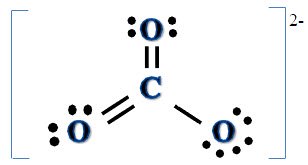
Resonance structures show the different ways in which bonding structures can be shown. In reality, all of the possible resonance structures are put together in the actual molecule. As shown in the picture below, this bonded molecule can be shown in these possible ways, even though it is essentially the same thing.

https://www.khanacademy.org/science/organic-chemistry/organic-structures/formal-charge-resonance/v/resonance-intro-jay
http://preparatorychemistry.com/Bishop_Resonance.htm


Electron Dot Formulas

Electron dot diagrams are visual ways of seeing how electrons are shared and distributed within bonds. They show the numbers of bonded pairs as well as lone pairs.

https://www.youtube.com/watch?v=y6QZRBIO0-o
https://www.khanacademy.org/science/chemistry/chemical-bonds/copy-of-dot-structures/v/drawing-dot-structures


Sunday, March 6, 2016

Unit Exam

I am fairly confident that I did well on this exam. This unit came easier to me than others, and I put a lot of work into understanding the concepts. The biggest challenge was remembering all of the little details that are the difference between getting a question right and not getting it right, such as the conversions or exceptions. I took my time and made sure that I understood the questions, and I think that this paid off because Frank warned us that the biggest grade killer was reading the question wrong. Hopefully I did as well as I'm anticipating; my grade really needs it!!!!

Image result for happy face

Wavelength, Frequency, and Energy Calculations

This was the only math portion of this unit. Within it, there are 3 equations that helped us calculate wavelength, energy, and frequency. It took some time to get the hang of it because we had to remember things such as Planck's constant and multiplying by Avogadro's number when calculation moles/photon, but once it was practiced a lot, it became second nature. I studied this a lot for the quiz and got all of the problems right, and by the time the exam rolled around, I barely had to touch up on it to remember. This is probably one of my favorite math concept that we have done in this class!

http://www.chemteam.info/Electrons/calc-energy-freq-wavelength.html
http://www.kentchemistry.com/links/AtomicStructure/waveequations.htm


Electron Configuration

This topic was probably the easiest to grasp for me. You just have to remember the four subshells and their locations (Smart People Drop First semester), and then you are able to formulate a configuration for an element. It is essentially their address, and it leads you to where they are located. It was fairly easy to make a configuration for an element as well as locate an element from a given configuration. There are 6 exceptions that we were accountable for, and they weren't difficult to remember either.


Periodic Trends

This lesson was one that took extra work in order to memorize and utilize accurately. Since there are several, remembering which way the trends go on the periodic table for all is crucial. I'll admit that I did not take the time to figure out what each means necessarily, I just made sure I remembered the direction of each.

http://chemwiki.ucdavis.edu/Core/Inorganic_Chemistry/Descriptive_Chemistry/Periodic_Trends_of_Elemental_Properties/Periodic_Trends
https://www.khanacademy.org/science/chemistry/periodic-table/periodic-table-trends-bonding

Quantum Numbers

Quantum numbers are a fairly easy concept to get. There isn't application, but it is simply memorization of what the four numbers mean and knowing how to locate elements from a set of numbers.

http://chemed.chem.purdue.edu/genchem/topicreview/bp/ch6/quantum.html
https://www.khanacademy.org/science/chemistry/electronic-structure-of-atoms/orbitals-and-electrons/v/quantum-numbers

These are two sources that I found helpful in putting this concept into perspective.

Thursday, February 18, 2016

Flame Test Lab

We did the flame test lab today in class. I think this was one of the cooler labs we have done, and it was really interesting to see how different metals burn in different colors.

I'm not sure what those rings are, but it looks awesome... :P


This is the source we used to find the wavelengths from knowing the colors: https://sites.google.com/site/thecreativechemistsprogram/flame-test-lab

Tuesday, February 16, 2016

Review of Acids and Bases

http://www.chemtutor.com/acid.htm

This was a website that I found very valuable in reviewing acids and bases. It provides everything you need to know from the properties of acids and bases to how to conduct titration. I wish that I would have had this source in studying for the test.


Titration

Titration was the most challenging aspect of this unit for me. Although the problems are generally conducted in the same way, it becomes confusing whenever there are contradicting mole ratios and confusingly worded questions. I would say that this was definitely the thing I struggled with most during the exam.

Here is an intro to titration: https://www.khanacademy.org/science/chemistry/acid-base-equilibrium/titrations/v/titration-introduction